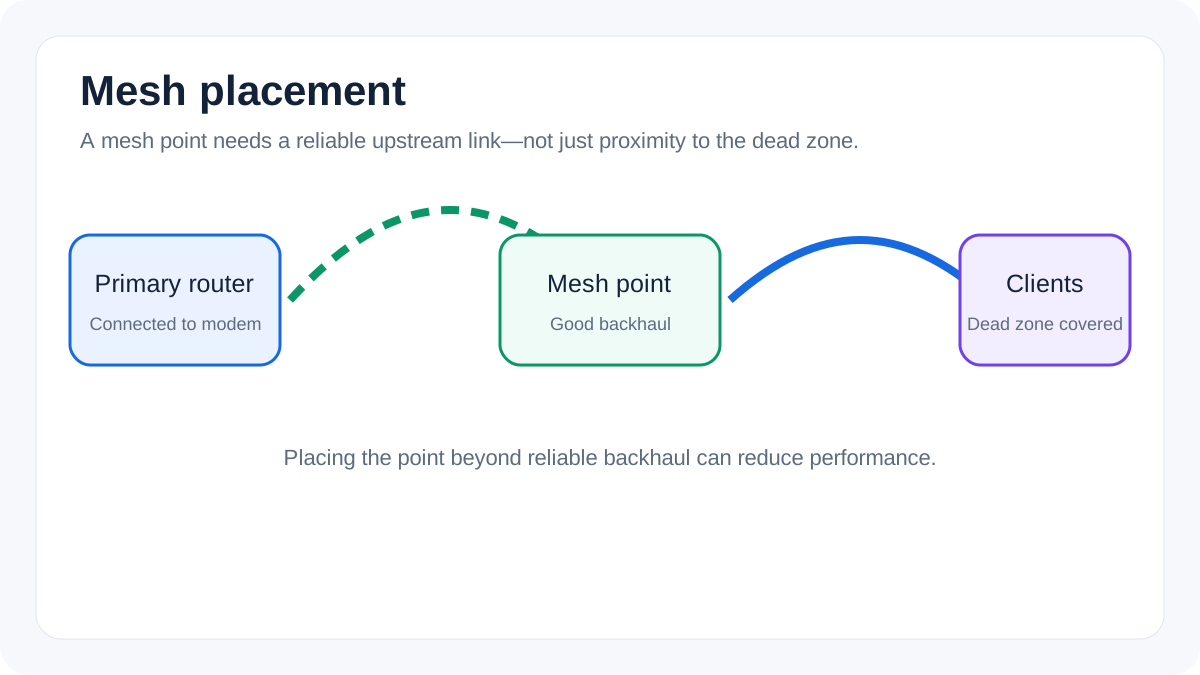
Choose a central, elevated, ventilated position while avoiding obstacles and major interference sources.
Core idea
Choose a central, elevated, ventilated position while avoiding obstacles and major interference sources. The practical effect depends on your router, client devices, internet service, cabling, and local environment.
Why it matters at home
Understanding this concept helps you diagnose problems accurately, choose compatible equipment, and avoid changing unrelated settings.
Practical guidance
- Use official documentation for model-specific capabilities.
- Prefer secure defaults and supported standards.
- Measure the result before and after a change.
- Avoid assuming faster specifications improve every device or room.
How to apply this guide
Best Place to Put a Wi-Fi Router should be changed only after identifying the failing network layer and recording the current configuration. Establish a repeatable baseline with the same client and connection method, then make one change at a time.
How to verify the result
Check local gateway access, Internet reachability and the original application or device that exposed the problem. If the result does not improve, restore the prior setting before moving to another variable.